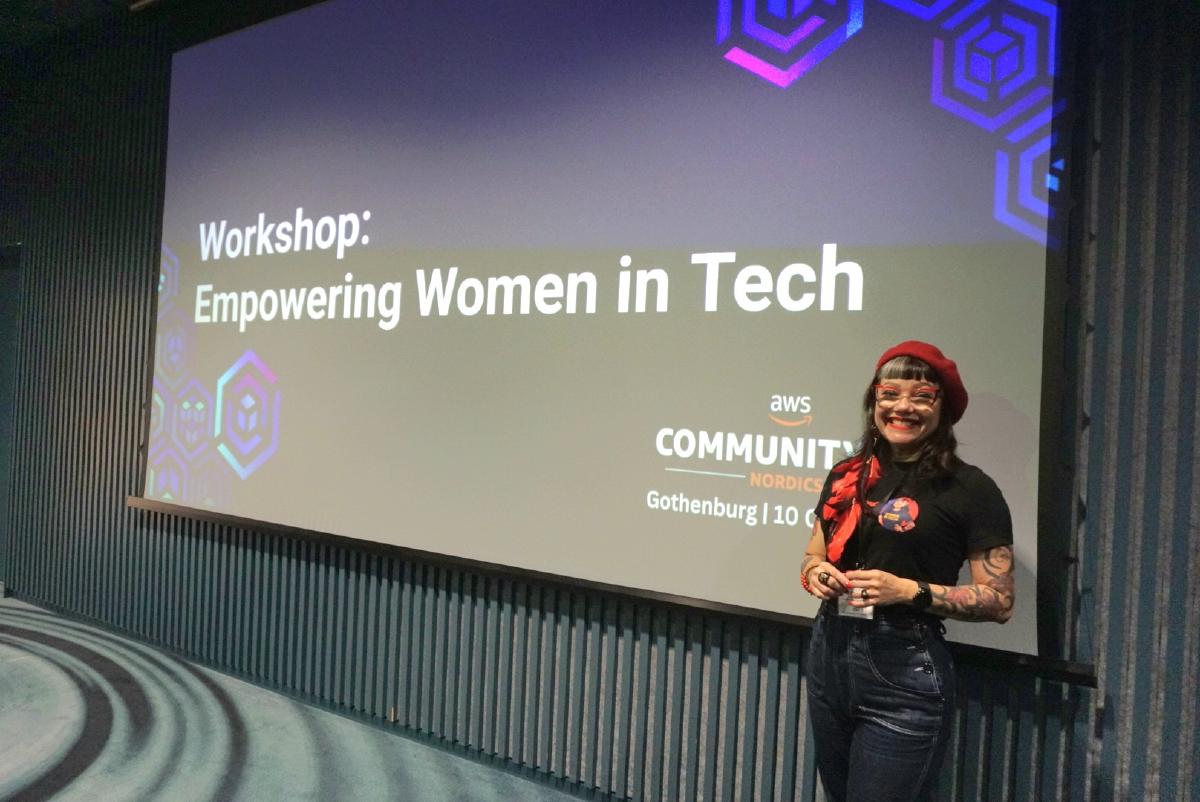
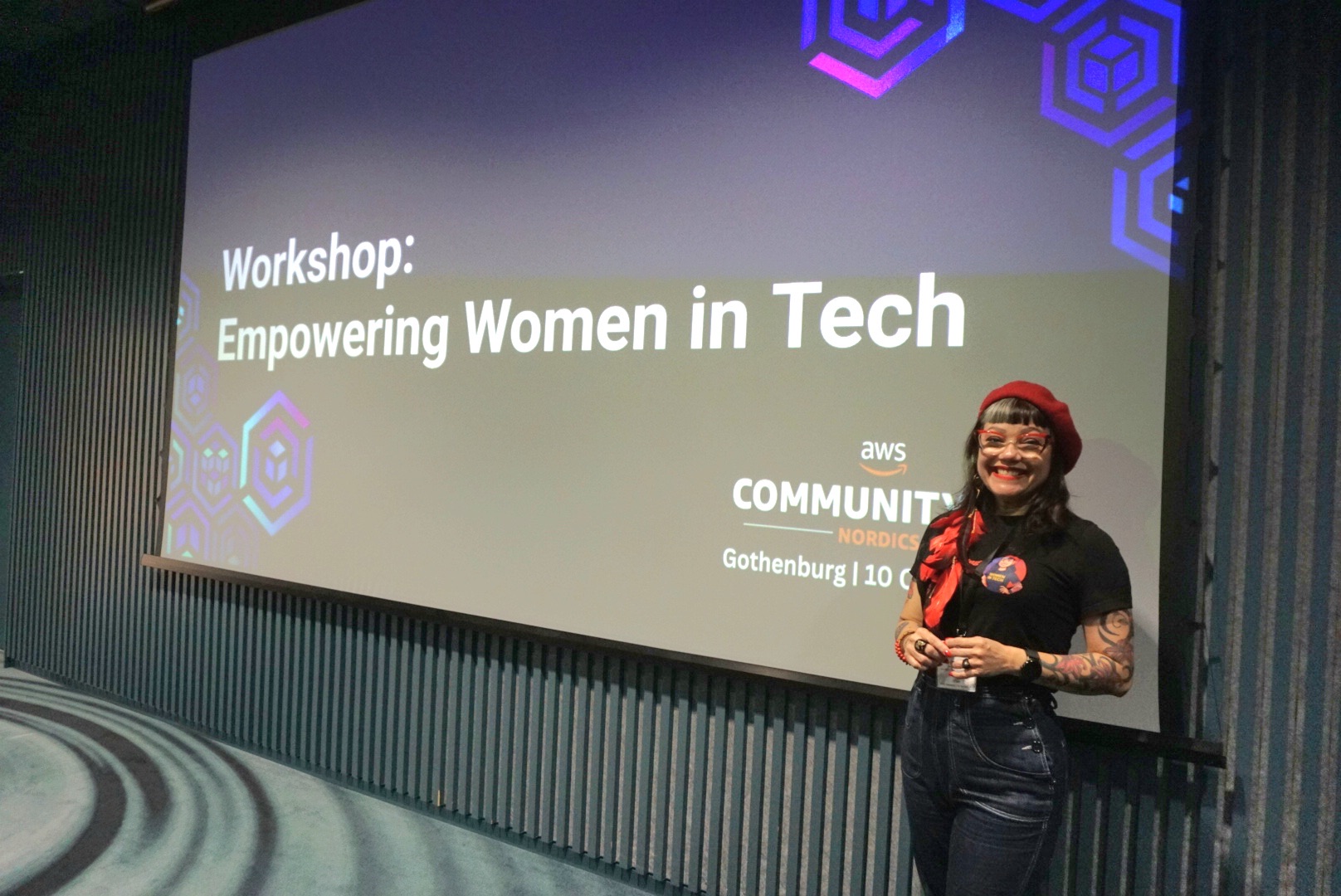
A great community can be life-changing. In the technology field, it can provide growth through learning, mentoring, volunteering, and project opportunities. There you can also find connections, collaborations, and friends for life. In my opinion, what makes all of that possible is belonging. Inclusion, one of the three pillars of DEI, is what makes people show up and stay. But belonging alone isn’t enough. A community also needs diversity and equity to really work. 🫶🏻
I’ve been managing meetups and talking about DEI principles in that space, especially around Women in Tech, since I changed careers into tech in 2020. From local Full-Stack and AWS community meetups to Women in Tech sessions worldwide, that experience led me to mentor other meetup organizers who want to increase representation in their own communities. One of the first things I learned, and the thing I always share in those mentoring sessions, is simple: listen to your community.
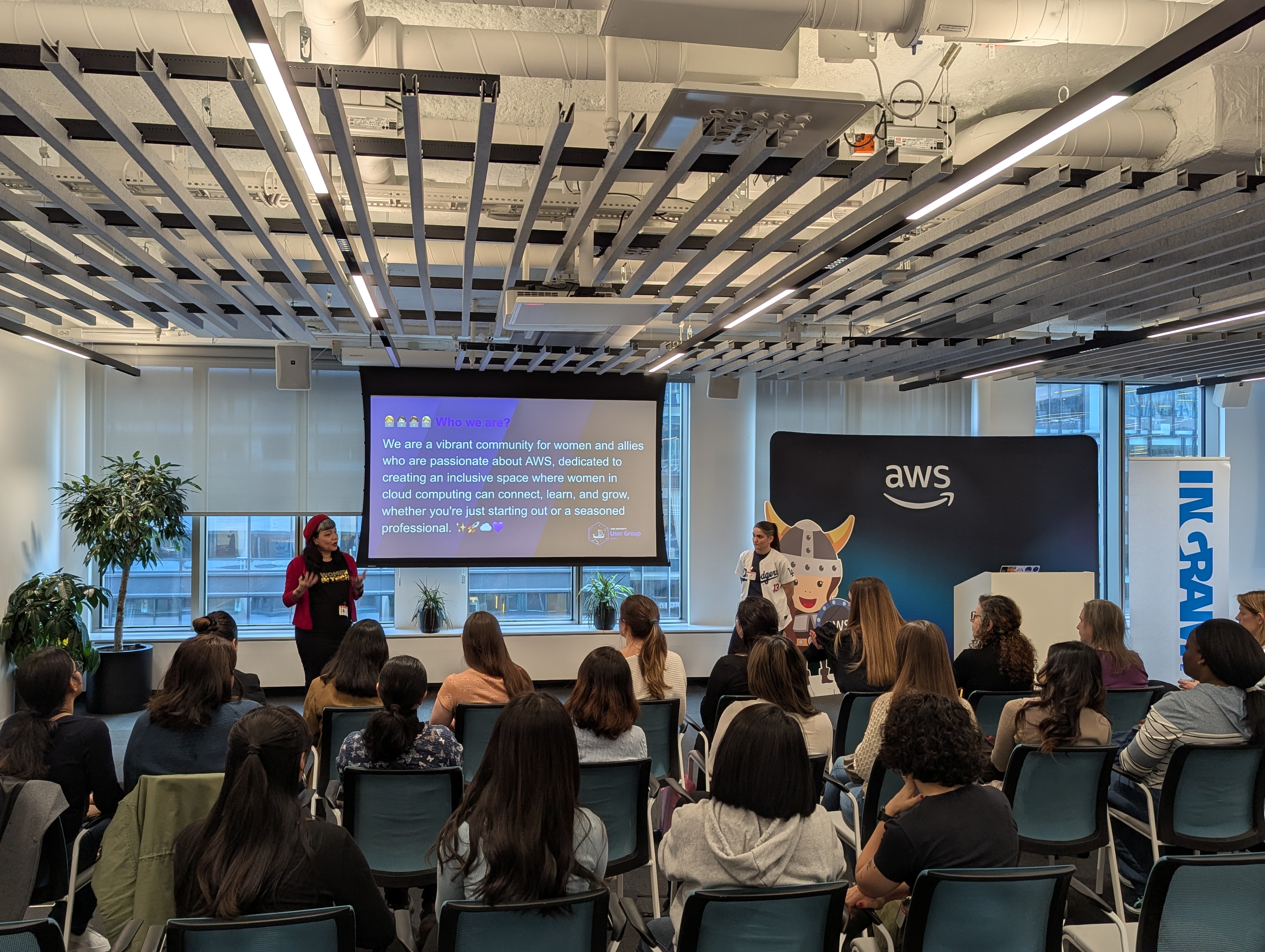
That’s also where the AWS Women’s User Group guide came from. Based on that experience, and on what I’ve learned connecting with other AWS WUG leaders, I wrote a guide to planning, launching, managing, and growing an AWS Women’s User Group, alongside a Newsletter resource to help keep members informed, valued, and engaged. The guide also supports AWS User Groups leaders interested in implementing DEI, providing a safe space, and fostering learning and growth in their communities. I shared both in several AWS Community Slack channels*, but most of what’s in them isn’t specific to AWS User Groups; it’s DEI insights that can help any meetup organizer. So that’s what I’m sharing here.
Here are a few simple things I’ve learned managing communities and workspaces that organizers of any meetup can start using to bring DEI principles into their communities. 🫂
Listen to your community#
If you’re looking to increase diversity in your meetup or community, start here:
- Listen to the women, trans women, and non-binary people who come to your events. Why did they come? What do they like? What don’t they like, and what can you improve to make more of them feel comfortable joining? These insights can lead to real, concrete ways to make your community and events more inclusive and welcoming.
- Support and encourage your members to support other Women in Tech communities, events, and initiatives. Connect with the organizers of DEI communities and ask how you can support them. Share their events in your community. Attend theirs to show support, and invite them to yours. To increase representation in your own community, support representation everywhere, and lead your community by example, not only by words.
Here’s what that looked like in practice for me. During conversations at various Women in Tech events, mainly in the AWS community ecosystem, attendees told me they were happy and comfortable there. Some had never been to gender-mixed tech events; others said it wasn’t something they used to do often. When I asked why, a few reasons came up again and again:
- They didn’t want to go alone.
- They didn’t feel comfortable.
- They were a minority (or sometimes the only one) at the event.
- They didn’t know many people.
- They didn’t feel part of the community or represented there.
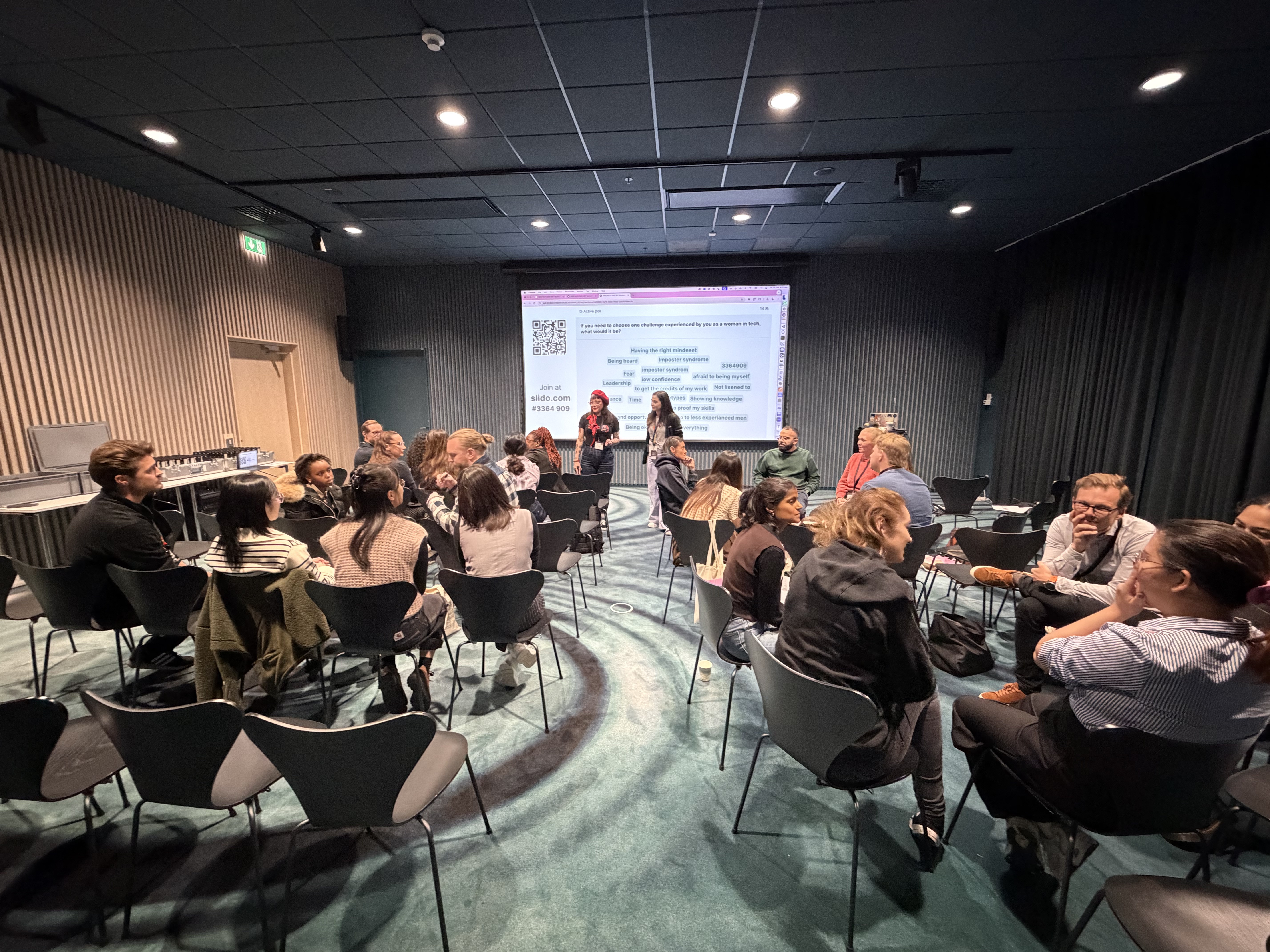
What’s interesting: some of these same women later told me that once they got used to the community through women-only meetups, they started attending, or became willing to attend, gender-mixed events at other AWS User Groups.
What changed? The understanding of how meetups worked. Beyond getting familiar with the community, they’d found peers who came with them and made them feel confident about walking into a gender-mixed room. Seeing gender-mixed meetup organizers and members actively supporting Women in Tech events made a real difference too. It told them they were welcome and part of that community, not just tolerated in it.
Diverse speakers#
Another issue meetup leaders often raise with me when looking for ways to increase representation is the lack of diverse speakers.
And yes, representation matters, a lot.
In my experience, people rarely come back to a meetup where they don’t know anyone, and nothing about it, the speaker, the talk, the room, reflects who they are. Having women, trans women, and non-binary people on stage makes their peers feel represented, and more likely not only to attend, but to contribute to the community too.
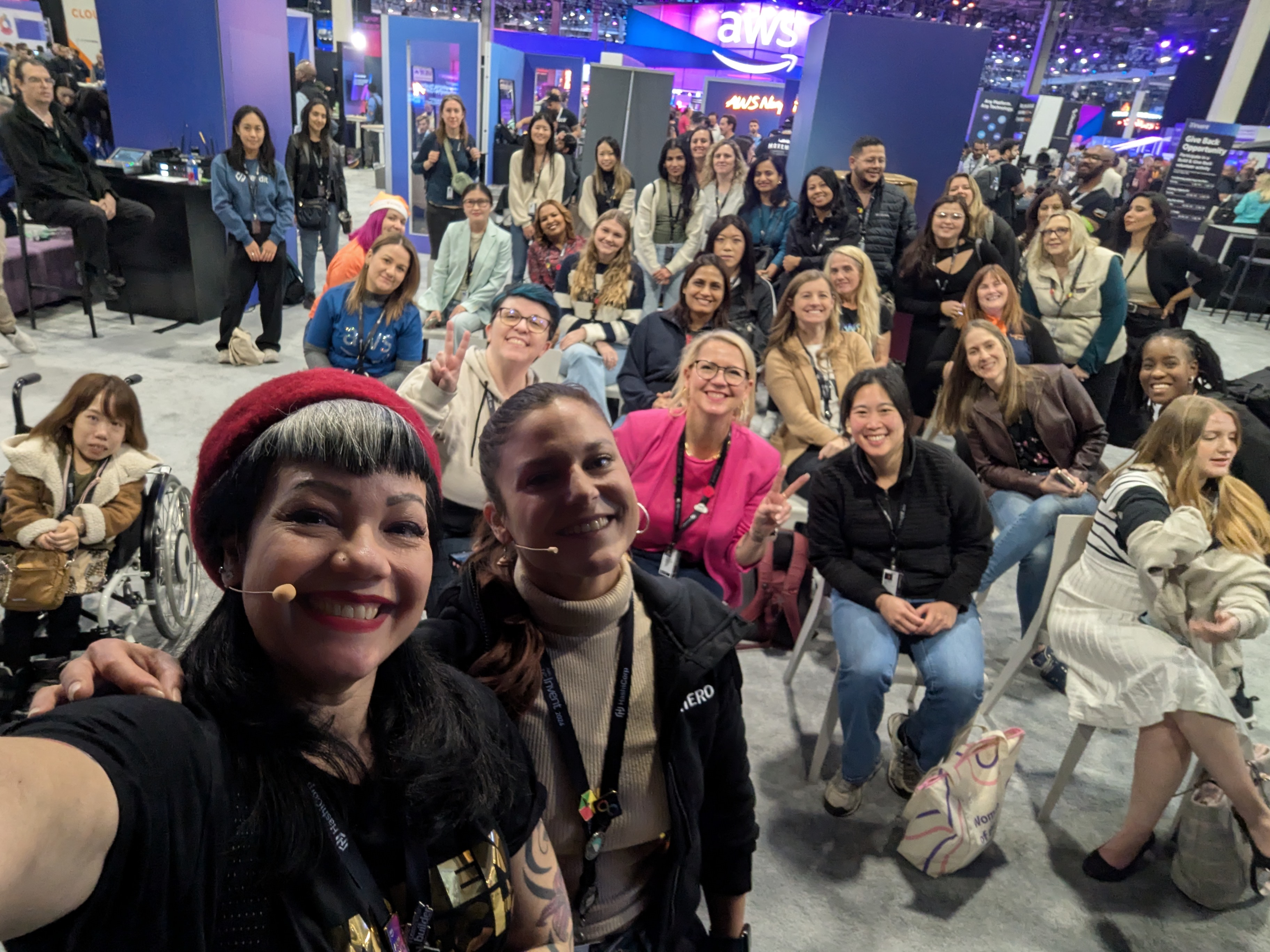
Women in Tech communities: Connecting with organizers of Women in Tech communities and supporting their events in person can help address this challenge. You’re likely to meet more diverse candidates to speak at your events this way than by staying in the same bubble, waiting for them to miraculously join your meetups.
Big tech companies: Depending on where your meetup is located and which tech area it covers, connecting with Developer Advocates (DAs) at big tech companies is another option for finding speakers. Using AWS as an example, we can usually count on DAs to help, not only by giving talks themselves, but by connecting us with women, trans women, and non-binary professionals (solutions architects, cloud engineers, and others) who can.
Sponsors: If your meetup has sponsors for events, ask them if they have someone on their team who fits the agenda (women, trans women, and non-binary people) to give a talk.
Note: I always recommend, in this case, avoiding a product pitch disguised as a talk. Audiences usually don’t like it. If a sponsor’s proposed speaker submission reads like a demo of their tool with a sales close, ask them to reframe it around what the audience will learn, not what the sponsor is selling.
Building future speakers: If you know anyone who can offer public speaking mentoring, ask for their help training women, trans women, and non-binary people in your community, and grow your speaker list that way. Using AWS as an example again, the AWS New Voices program trains AWS community members (User Group leaders, Community Builders, and Heroes) in public speaking. After completing it, they get the training and resources to give talks and to mentor other prospective speakers themselves.
If this is the case, flexibility matters too, so your new speakers feel comfortable giving a talk as beginners. You can adapt your event to include 15-minute lightning talks, for example, which makes it much easier for a first-time speaker than a structured 1-hour talk.
Code of conduct#
Every meetup needs a public Code of Conduct. The ideal is to have one before your first event, not after an incident forces you to write one. It’s even better if it’s built with diversity, equity, and inclusion in mind from the start. But if you don’t have one yet, it’s not too late to start or adapt yours. Better late than never.
At minimum, yours should cover:
- Whom it protects, and from what (harassment, discrimination, and unwelcome conduct based on gender, race, disability, appearance, and so on).
- Where it applies (the event, official group chats, and online spaces tied to the community).
- Who to contact if something happens, by name, with a way to reach them during the event (not just an email that gets checked next week).
- What happens after a report: a warning, then removal from the event, then a ban from future events for repeat or serious violations.
- A commitment that reports are taken seriously and handled without putting the burden of proof on the person reporting.
The good news: you don’t need to write this from scratch. The Python Software Foundation’s Code of Conduct and its accompanying enforcement guidelines are widely adapted across the tech community and are a solid starting template. Adapt the language, keep the structure.
Put the short version on your event page and in your opening slides, with a link to the full version. At each event, don’t forget to bring it up. A CoC nobody sees or knows about isn’t protecting anybody.
Building the community#
There are many ways to make your events more welcoming. For example, you can print or write badges with members’ first names. It helps people identify themselves and breaks the ice when they don’t know or forget someone’s name, making it easier to start a conversation.
Another example is a board where members can pick a badge color to show whether they want to network or are just there to learn and don’t need to talk. Not forcing networking is also a way of showing respect.
You can research many more tactics to increase connection and integration at your events.
Note: if you photograph your events for recap posts or anything else, say so upfront, and give people a real way to opt out. The easiest version: add a sticker or mark to the badges you’re already using for icebreakers (a small dot or a different color works), so photographers can see at a glance who not to include. Mention the option at check-in and again when you open the event.
This matters more than it might seem. Not everyone at a DEI event is out at work or comfortable being publicly tagged at a women’s community event. An opt-out that actually gets honored is part of what “safe space” means in practice, not just in your Code of Conduct.
Accessibility#
Inclusion doesn’t stop at gender. Before announcing a meetup, check the venue and time slot for:
- Step-free access, accessible restrooms, and a room layout that works for wheelchair users.
- Start time. Mid-morning tends to work better than early morning or evening for people with childcare responsibilities or chronic health conditions. That said, meetups are usually held in the evening, after work, so announce the time upfront so people can plan around it.
- Cost to attend beyond the ticket: transport, parking, or a babysitter. If you can offset any of this (checking whether your sponsor has parking available, or offering an on-site kids’ corner), mention it on the event page. People won’t ask if they don’t know it’s an option.
- For online and hybrid events: live captions where your platform supports them, and a recording posted afterward for anyone who couldn’t attend live.
You won’t solve every barrier for every event. Picking two or three to work on actively, and being upfront about the ones you haven’t solved yet, is enough to start.
Keep listening, learning, and improving#
A survey is a great way to hear from your community: what went well, what can improve, what they want to see, and anything else they have to say. A simple Google Form sent once a year, with questions about what you want to hear and where you want to improve, can return valuable insights for your next steps.
If a survey result turns into something you actually implement, tell your members at your next event. It shows them they’re heard and really part of the community.
Beyond the annual survey, a handful of simple metrics tell you whether the meetup is actually working, not just running:
- Repeat attendance: how many people come back for a second or third event.
- First-time speakers: how many people gave their first talk ever at your meetup.
- Speaker diversity across the year, not just per event (relying on the same three speakers repeatedly is a sign your speaker pipeline needs more investment, not that your community lacks talent).
- Where new members hear about you (ally User Group shoutouts, social media, word of mouth), so you know which growth channel is actually working.
Look especially for the DEI outcomes you want to monitor and improve. You don’t need a dashboard. A shared spreadsheet updated after each event is enough to spot patterns by year two.
Wrapping up#
Implementing DEI, providing a safe space, and fostering learning and growth can make your community an even better place to be part of, and none of it needs to happen in one day.
The tips above don’t cover even a third of what can be done, but they’re a place to start. And starting is better than doing nothing.
If you have more insights on how we can make our tech communities safer and more diverse, I’d love to hear them. Share them in the comments on LinkedIn, and let’s build more inclusive spaces together. ✨🚀☁️💖
*Note: If you’re interested in founding an AWS Women’s User Group, or you lead an AWS User Group and want to increase representation in your community, and you missed the guide links shared in AWS Community Slack channels, comment on this article on LinkedIn or message me directly, and I’ll send them your way. Both guides are also available in Guides.